
High chrome white iron: what the carbides buy you, and what they cost
The hardest wear material we cast, and the least forgiving. Here is the trade you are making at 56–61 HRC.
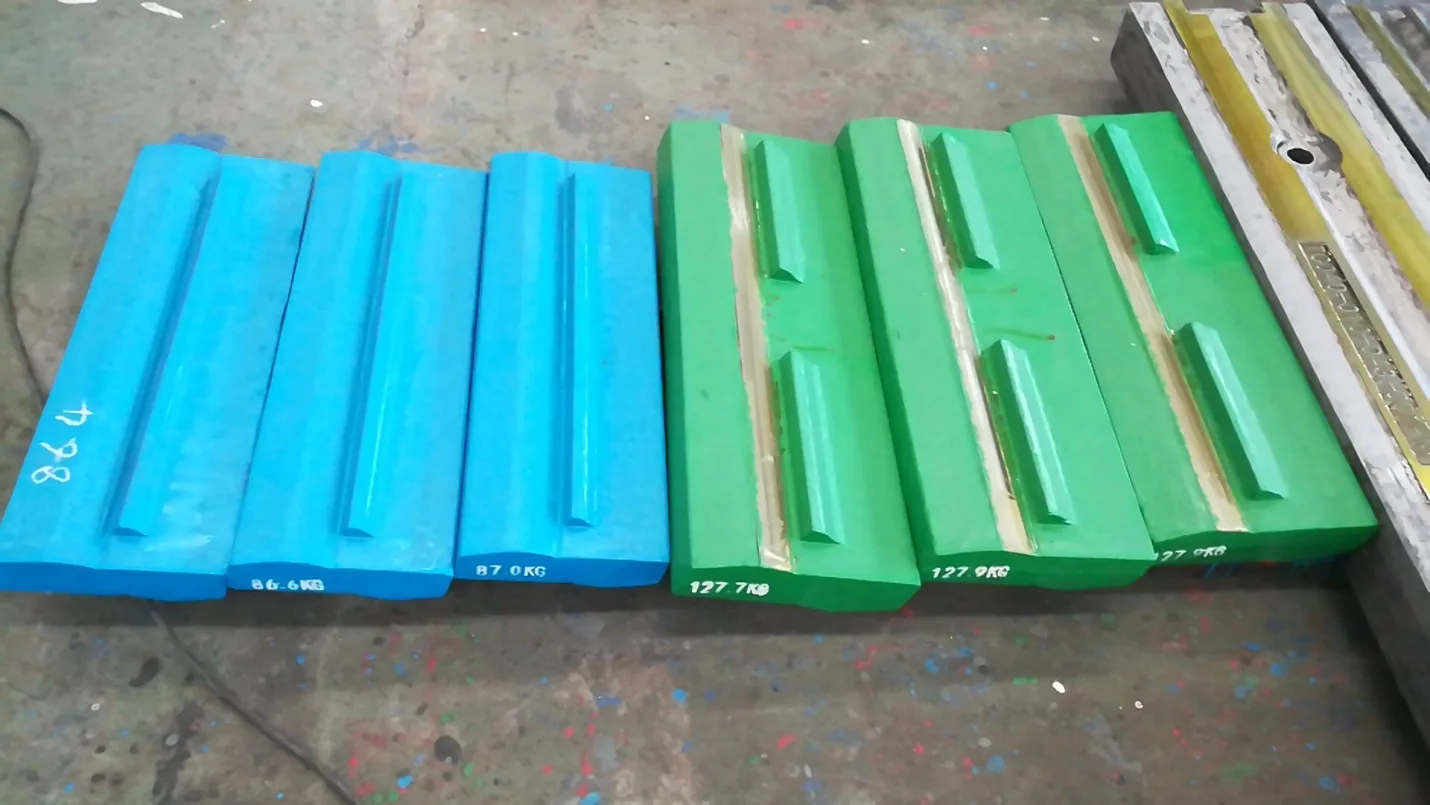
High chrome white iron is the material people reach for when abrasion is destroying their wear parts. It earns that reputation. It is also the material that generates the most warranty conversations — almost always for the same reason.
Where the hardness comes from
In high chrome iron, the carbon is chemically bonded in the form of chrome carbide. The wear resistance is based on these hard chrome carbides held in a hard matrix, where movement is hindered by offsets.
That structure provides for a degree of strength — but at the same time, less toughness. You cannot have both. The very thing that makes the material resist abrasion is what makes it unwilling to bend rather than break.
The heat treatment is not optional
To prevent the material from becoming too brittle, the blow bars are heat treated. It must thereby be observed that the temperature and annealing time parameters are adhered to. This is not a step to be rushed or approximated; get it wrong and you have a bar that is brittle in service rather than merely hard.
Done properly, chrome iron typically reaches a hardness of 56 to 61 HRC — with very low impact strength.
What this means on your machine
High chrome wear parts are ideally suited to applications with high abrasion, offering cost effective wear life. In clean, highly abrasive rock, nothing we make will give you a better cost per tonne.
They are not suited to applications where tramp metal or uncrushable objects are included in the feed material. This is the single most common cause of a high chrome bar failing early — not a defect in the casting, but a piece of steel in the feed that the bar was never able to survive.
If uncrushables reach your chamber, you want manganese steel. If your feed varies and you cannot promise either way, you want martensitic.
Medium or high chrome
We supply high chrome in medium and high chrome grades, and cast a wide range in it: impactor wear parts including liners, blow bars, distributor plates, anvils and impellers, plus mixer wear plates for concrete and asphalt plants.
Tell us the feed and the machine, and we will tell you which end of the range you should be on — or whether you should be on a different grade altogether.
See what we cast in high chrome →Crushing & aggregates parts →