
Manganese, high chrome or martensitic? One question decides it
Not price. Not hardness. What is in your feed.
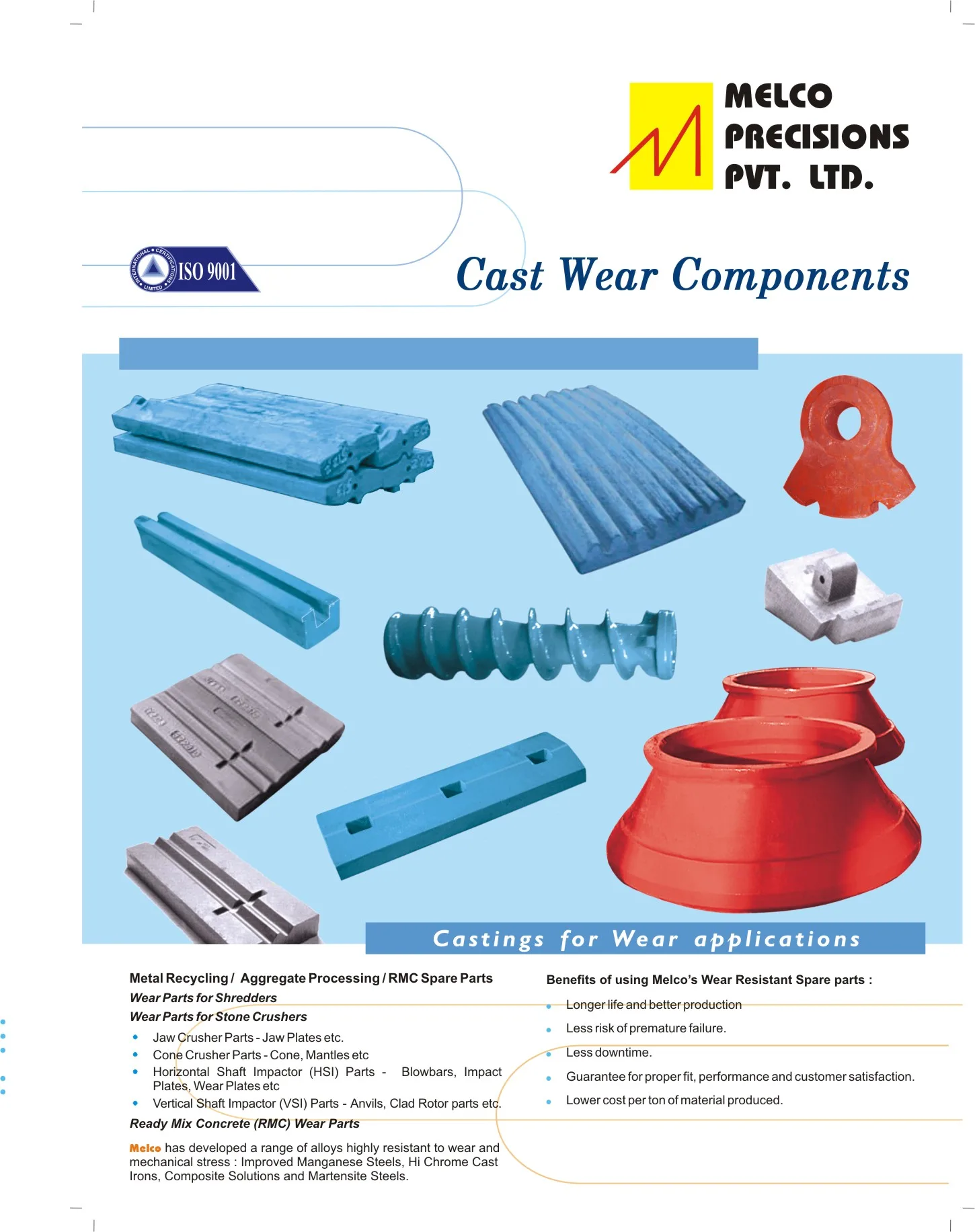
There is no best grade. There is only the grade that matches your feed. Every other consideration — price, hardness, availability — comes after that one, and choosing on hardness alone is how people end up with a shattered blow bar in week two.
Here is the decision as we actually make it with customers.
Are there uncrushables in the feed?
If tramp metal or uncrushable objects reach the chamber — rebar, engine blocks, a length of drive shaft, anything that will not break — the answer is manganese steel, and the conversation is largely over.
Manganese is a relatively low-cost option offering good wear life, and is ideally suited for high impact applications of exactly this kind. It arrives at 200/230 Brinell and work-hardens to around 500 Brinell in service, roughly 10 mm deep, while the layers underneath stay tough. That tough core is what survives the thing that would fracture a harder bar.
Is the feed clean and abrasive?
If nothing uncrushable gets in and abrasion is what is eating your parts, you want high chrome white iron. It is ideally suited to high abrasion applications and gives cost effective wear life.
The carbon is bonded as chrome carbide, and those hard carbides in a hard matrix are what resist the wear. The price is toughness: at 56 to 61 HRC the impact strength is very low, and there may not be any unbreakable elements in the feed. Available in medium and high chrome grades.
Does the feed keep changing?
This is the case that defeats both of the above, and it is more common than people admit. Some days clean rock, some days a surprise.
Here you want martensitic steel. Melco martensitic wear parts are considered ideal in applications where the feed material varies. They offer impact resistance similar to manganese steel with improved wear properties, and demonstrate good resistance to abrasive gouging.
Blow bars in martensitic steel are used in primary or secondary crushing where high wear and impact both exist — applications in which manganese is not suitable because of its low hardness, and chromium white iron is not durable enough for the impact.
The fourth grade, for a different problem
One duty does not fit the framework at all. Grate bars in waste-to-energy boilers and iron ore pellet plants barely see abrasion. They fail by creep, thermal fatigue and oxidation — the bar sags, cracks across its section, or scales away until it loses its profile.
Hardness is close to irrelevant there. Those parts are cast in heat resistant cast steel, chosen for its behaviour at temperature.
If you are not sure
Send us the machine, the part, and an honest description of what goes into it. The honest description is the valuable part — we would rather hear "mostly clean, but we do get rebar occasionally" than a specification, because that sentence changes the answer.